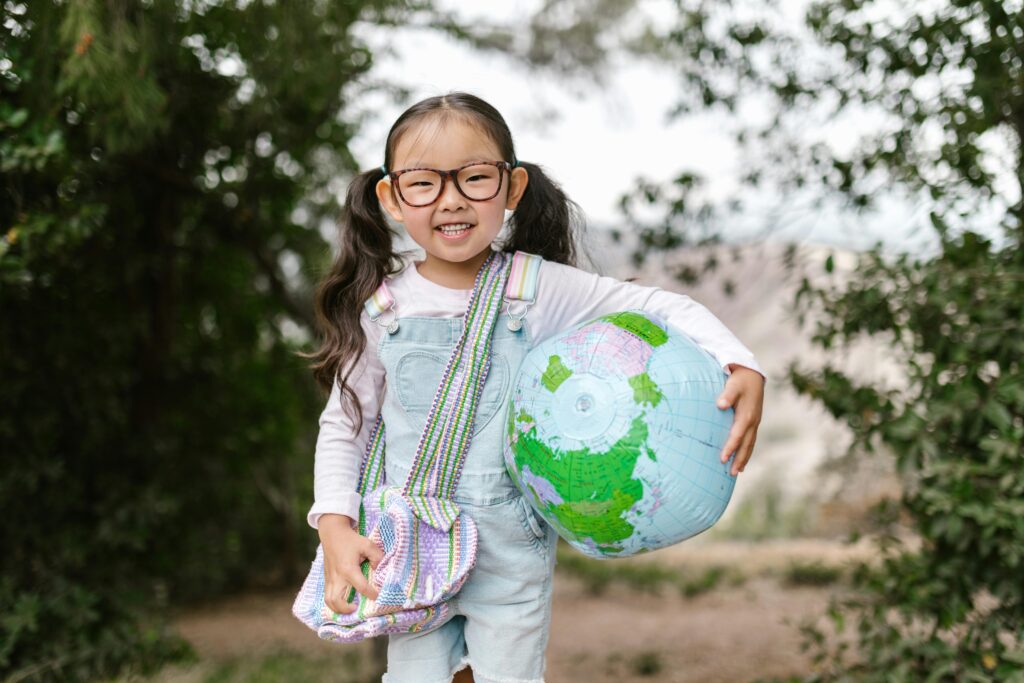
As the world becomes increasingly interconnected, raising children who understand empathy, diversity, and responsibility toward others has never been more important.
That’s the essence of Global Citizenship Education (GCE) — helping children see themselves not just as members of a classroom or a city, but as active participants in a shared global community.
And while schools are beginning to embrace global perspectives, afterschool programs in Tokyo are emerging as some of the most dynamic spaces for nurturing these future-ready citizens.
What Is Global Citizenship Education?
Global Citizenship Education encourages children to:
- Understand global issues such as sustainability, inequality, and culture.
- Appreciate diversity and respect differences.
- Develop empathy and social responsibility.
- Think critically about the world around them.
- Take small actions that contribute to a more peaceful, equitable society.
According to UNESCO, GCE “aims to empower learners of all ages to assume active roles, both locally and globally, to build more just, peaceful, tolerant, and sustainable societies.”
In essence, for children, this begins with awareness and empathy — learning to connect their own experiences with those of others across cultures and borders.
Why Afterschool Programs Are Ideal for Global Citizenship Education
Moreover, afterschool programs provide a more open, flexible environment than traditional classrooms — making them the perfect space to explore global perspectives in meaningful ways.
Here’s how:
1. Exposure to Cultural Diversity
Firstly, in a multicultural city like Tokyo, afterschool programs often bring together children from various nationalities. Interacting in such diverse groups naturally builds cultural awareness, tolerance, and appreciation.
2. Collaborative Global Projects
From eco-challenges to cultural exchange activities, children can work together on global themes — learning to think critically about the environment, equality, or innovation.
3. Learning Through Dialogue and Reflection
Afterschool educators can create safe spaces where children discuss ideas like fairness, kindness, and community — the heart of global citizenship.
4. Connecting Local and Global
Activities that blend Japanese traditions with international themes help children understand that being “global” doesn’t mean losing one’s identity — it means expanding it.
5. Building Empathy and Responsibility
Finally, through stories, service activities, or virtual exchanges, children learn that their actions — big or small — have an impact on the world around them.
The Mirai Minds Approach
At Mirai Minds, we believe that raising global citizens starts with nurturing curiosity and compassion.
Our afterschool programs in Tokyo are designed to help children:
Explore world cultures through storytelling and creative projects.
Build empathy through teamwork and dialogue.
Think critically about real-world challenges.
Take initiative through community and sustainability projects.
We want every child to grow up not only informed, but inspired — ready to make a difference wherever they go.
Raising Global Citizens, One Afterschool Session at a Time
The future belongs to those who understand connection, not competition.
By giving children a global lens early in life, we help them develop essential emotional and intellectual tools. In turn, these tools prepare them to thrive in an ever-changing world.
To see this in action, explore how Mirai Minds Afterschool Programs in Tokyo are preparing children to become empathetic, confident, and globally minded leaders.
Visit Mirai Minds to learn more or speak to our team.