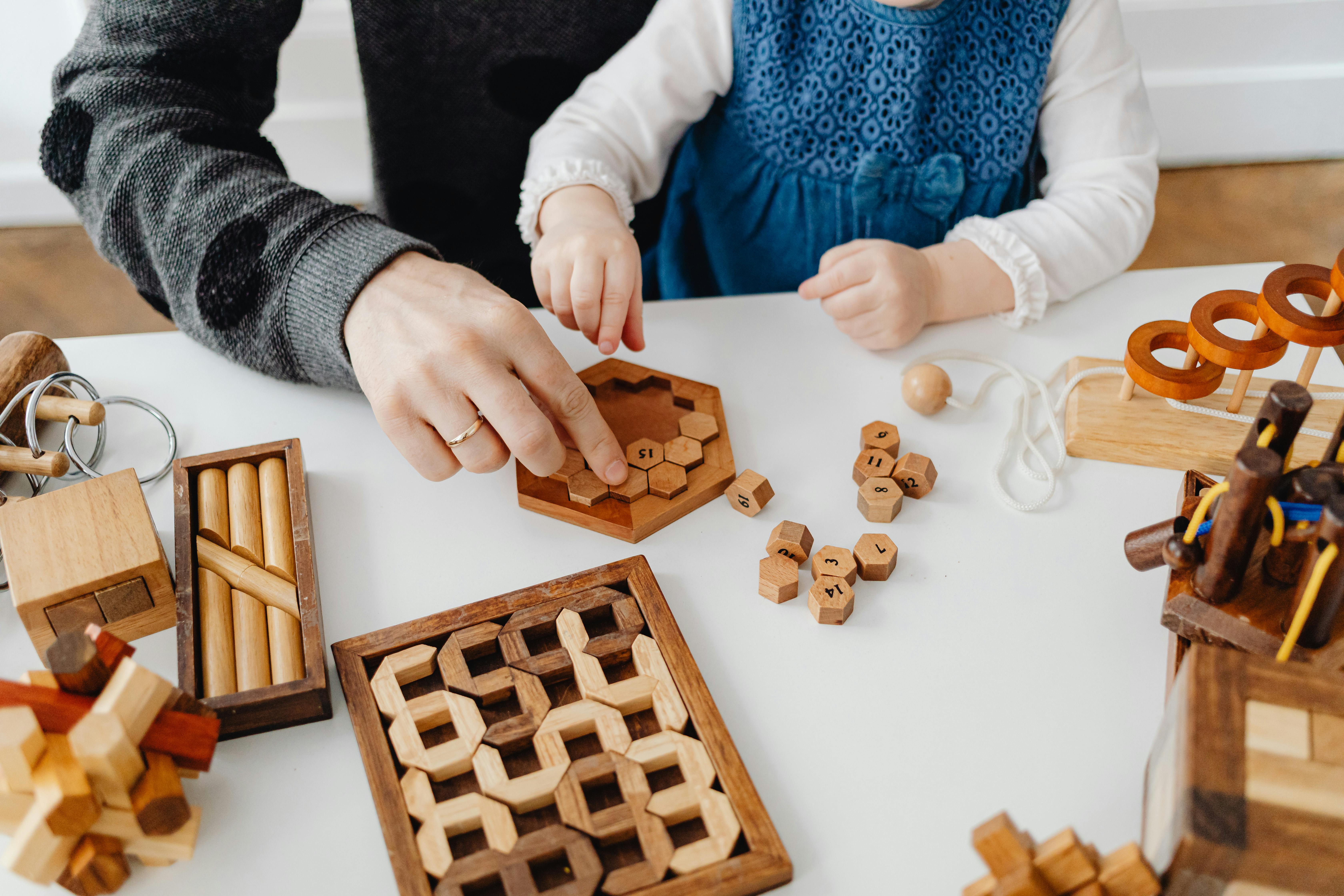
In recent years, there has been growing interest in how play-based learning contributes to cognitive development in children. Within Afterschool Programs in Tokyo, logic puzzles and board games are increasingly being understood not simply as recreational tools, but as structured activities that support essential psychological processes. From a developmental perspective, these activities create opportunities for children to engage in problem-solving, regulate emotions, and build adaptive thinking patterns in a relatively low-pressure environment.
Cognitive psychology suggests that children learn most effectively when they are actively involved in constructing knowledge rather than passively receiving it. In this context, Afterschool Programs in Tokyo provide an important space where learning can extend beyond the classroom and take on more exploratory forms. Logic puzzles and board games align closely with this approach, as they require children to think, test, revise, and reflect.
Cognitive Development and Problem-Solving
Logic puzzles engage several higher-order cognitive functions, particularly those associated with the prefrontal cortex. These include working memory, cognitive flexibility, and inhibitory control. When children attempt to solve a puzzle, they are required to hold information in mind, evaluate different possibilities, and adjust their approach when faced with obstacles.
In Afterschool Programs in Tokyo, such activities are often integrated to support analytical thinking, which is also a key component of STEM Education Japan. For instance, puzzles that involve sequencing or pattern recognition encourage children to identify underlying structures and relationships. Over time, repeated exposure to these types of challenges can improve a child’s ability to approach complex academic tasks in a more systematic and confident manner.
Board Games and Executive Function
Board games add an additional layer by incorporating social and emotional dimensions into cognitive development. Executive function skills, which include planning, decision-making, and self-regulation, are consistently activated during gameplay.
Within Afterschool Programs in Tokyo, board games often require children to follow rules, anticipate consequences, and make strategic decisions. These processes are closely linked to the development of self-control and delayed gratification. For example, a child may need to resist an immediate move in favor of a more beneficial long-term strategy. This ability to pause and evaluate is a critical aspect of executive functioning and has been widely studied in both educational and psychological research.
Additionally, board games create a natural context for social learning. Children learn to interpret others’ perspectives, manage competition, and respond to both success and failure. These experiences contribute to emotional regulation, which is equally important as cognitive ability in overall development.
Learning Through Failure and Adaptation
An important aspect of both puzzles and board games is that they normalize failure as part of the learning process. Unlike traditional academic settings where errors can carry negative consequences, these activities allow for repeated attempts without significant pressure.
In Afterschool Programs in Tokyo, this dynamic can encourage a growth-oriented mindset. Children begin to understand that mistakes are not endpoints but rather informative feedback. This reflects broader findings in STEM Education Japan, which emphasize iterative learning and problem-solving.
From a psychological standpoint, this process supports resilience. When children get the opportunity to try again, they build persistence and develop a greater tolerance for frustration. These traits are essential not only for academic success but also for long-term adaptability.
Integration of Logic and Creativity
Many people assume that logical thinking and creativity operate independently. However, research shows that they are closely interconnected. Board games and puzzles actively require imaginative thinking, especially when children visualize outcomes or generate multiple solutions.
Well-structured Afterschool Programs in Tokyo encourage children to explore different strategies rather than adhere to a single correct approach. This flexibility supports divergent thinking, which is a key component of creativity. At the same time, the logical framework of the activity ensures that their ideas remain grounded and purposeful.
This balance is particularly relevant in STEM Education Japan, where innovation depends on both analytical precision and creative problem-solving.
Why This Matters for Children Today
The inclusion of logic puzzles and board games in Afterschool Programs in Tokyo reflects a broader shift toward holistic education. Rather than focusing solely on academic performance, there is increasing recognition of the importance of cognitive processes, emotional regulation, and social interaction.
Through consistent engagement with these activities, children can develop skills such as strategic thinking, adaptability, and self-awareness. These abilities do not exist in isolation but interact as interconnected competencies that shape how children learn, interact, and respond to challenges.
Learn More with Mirai Minds
From a psychological perspective, logic puzzles and board games offer a meaningful way to support cognitive growth in children. They engage critical mental processes, encourage reflective thinking, and provide a safe space for experimentation and learning.
At Mirai Minds, we ground our Afterschool Programs in Tokyo in these principles. We aim to create environments where children can engage deeply, think independently, and develop skills that extend beyond the classroom.
To learn more about our programs or to enroll your child, you can reach out to us at hello@miraiminds.jp.
Read our previous blog posts here!