In a world that often celebrates success, it can be easy for children to feel that mistakes are something to be feared. Yet, research in child psychology consistently shows that the most resilient, innovative, and confident children are those who embrace learning through failure. Creative workshops provide the perfect environment for children to embrace experimentation, take risks, and understand that mistakes are stepping stones to mastery.
Why Learning Through Failure is Essential for Growth
When kids are allowed to fail in a safe, supportive environment, they develop crucial skills that go far beyond the classroom. Failure teaches children to adapt, think critically, and approach problems from different angles. It encourages curiosity because they are no longer constrained by fear of being wrong. Over time, children who are comfortable with failure become more confident in their abilities, more willing to try new things, and more capable of solving complex problems.
For example, a child building a model bridge in a creative workshop may see their structure collapse multiple times. While it may seem like failure, each collapse teaches them about balance, weight distribution, and materials. With guidance from a supportive facilitator, the child learns to iterate, try again, and eventually succeed—internalizing the lesson that mistakes are opportunities, not setbacks.
Creative Workshops as Safe Spaces for Experimentation
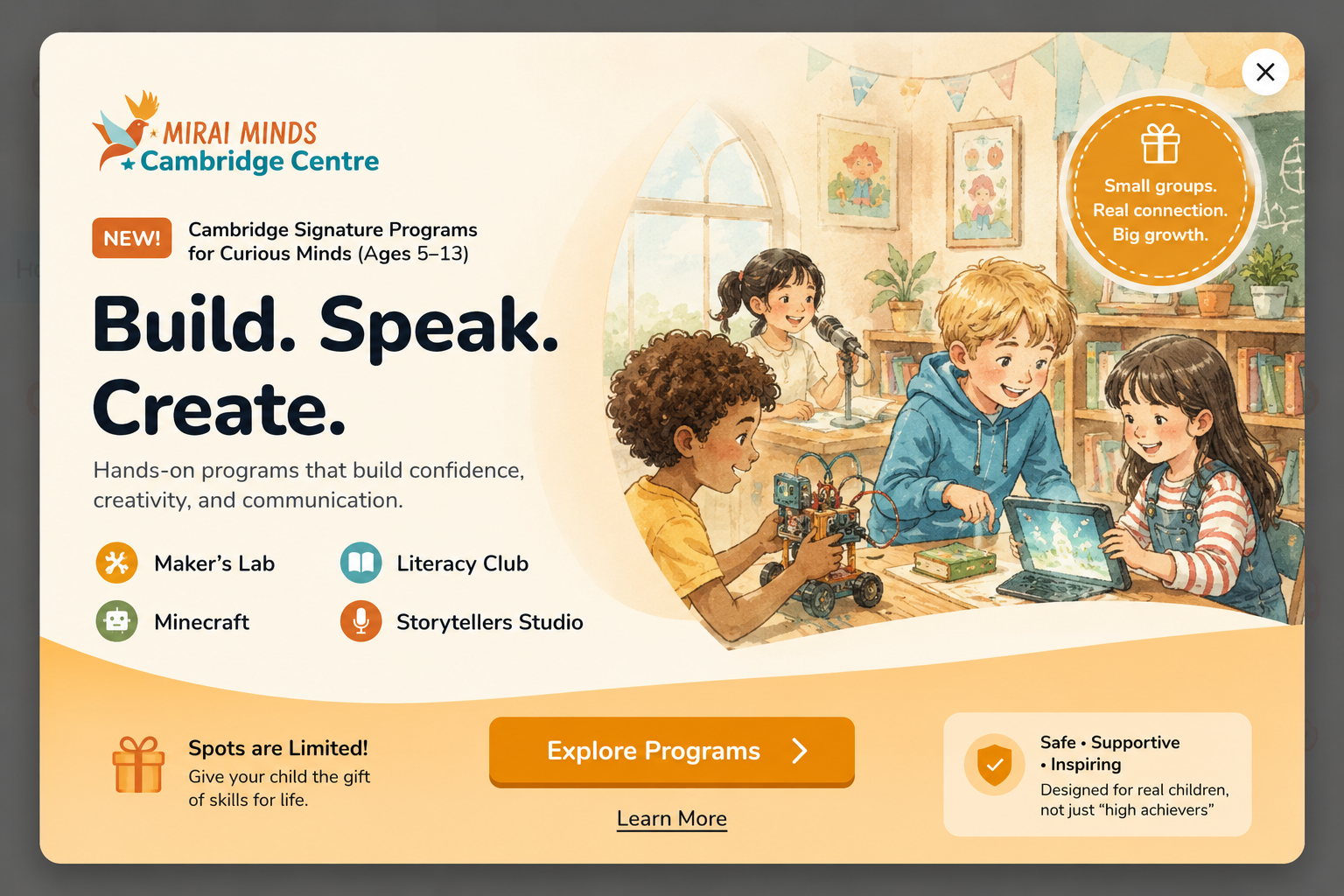
We design our creative workshops such that we are uniquely able to teach this mindset. Unlike traditional classroom settings, which often emphasize correct answers and grades, workshops prioritize hands-on learning, exploration, and process over product. Whether it’s building, painting, coding, or storytelling, we encourage children to experiment, test hypotheses, and learn from trial and error.
Here’s why creative workshops make learning through failure fun:
- Hands-On Projects: Children actively manipulate materials, experiment with ideas, and see real-time results. This tactile approach makes abstract concepts concrete and learning memorable.
- Iterative Learning: Workshops encourage iteration—kids test, fail, adjust, and try again. This cycle builds perseverance, analytical thinking, and adaptability.
- Collaborative Environment: Working in small groups or pairs allows children to share ideas, see different approaches, and support each other through challenges. It reinforces that mistakes are normal and part of collective problem-solving.
- Facilitator Guidance: Skilled educators observe and guide rather than dictate, asking questions that prompt reflection, encouraging kids to think critically about what went wrong, and celebrating every small discovery.
Learning Through Failure Helps Build Confidence and Resilience
One of the greatest benefits of embracing failure is the boost it gives to confidence and resilience. Children who learn to approach mistakes positively are more likely to take on challenges, pursue their interests, and persevere through setbacks. Creative workshops provide multiple low-stakes opportunities to experiment, whether through messy art projects, robotics challenges, or narrative storytelling exercises. Each project completed, revised, or even “failed” successfully adds to a child’s sense of capability.
For example, in a coding workshop, a child may struggle to get their animation to work. Instead of the mentors telling them “you’re wrong,” they encourage children to debug, test new logic, and problem-solve independently. The moment their program finally runs, the satisfaction of achieving success after repeated attempts is far more meaningful—and far more confidence-building—than simply following step-by-step instructions.
Practical Tips for Parents
Parents can reinforce the lessons learned in creative workshops at home:
- Celebrate Effort, Not Just Outcome: Focus on the process, creativity, and persistence rather than perfect results.
- Normalize Mistakes: Share stories of failures in everyday life and share how you resolved them.
- Encourage Exploration: Provide open-ended materials, challenges, and prompts that allow experimentation.
- Ask Reflective Questions: Encourage children to think about what worked, what didn’t, and what they might try next.
- Join Workshops or Activities: Observing children in creative workshops can give insights into how they handle failure and how to support them at home.
Are Your Ready to Help Your Child Embrace Learning Through Failure?
Embracing failure as part of learning is one of the most powerful gifts parents can give their children. Creative workshops provide the perfect playground for experimentation, curiosity, and self-discovery. They help children see mistakes as opportunities to grow rather than obstacles.
At Mirai Minds, children engage in hands-on, project-based learning that celebrates creativity, experimentation, and discovery. You said:
Instead of being told “you’re wrong,” they actively debug, test new logic, and solve problems independently.
We create a safe, encouraging space for trial, error, and iteration. This helps children develop confidence, resilience, and a love for learning that lasts a lifetime.
Give your child the freedom to experiment, create, and grow—book a trial workshop at Mirai Minds today and watch them discover that learning through failure is just the first step to success.