In a world that often rushes children from school to structured activities, the need for a third place for children has never been more urgent.
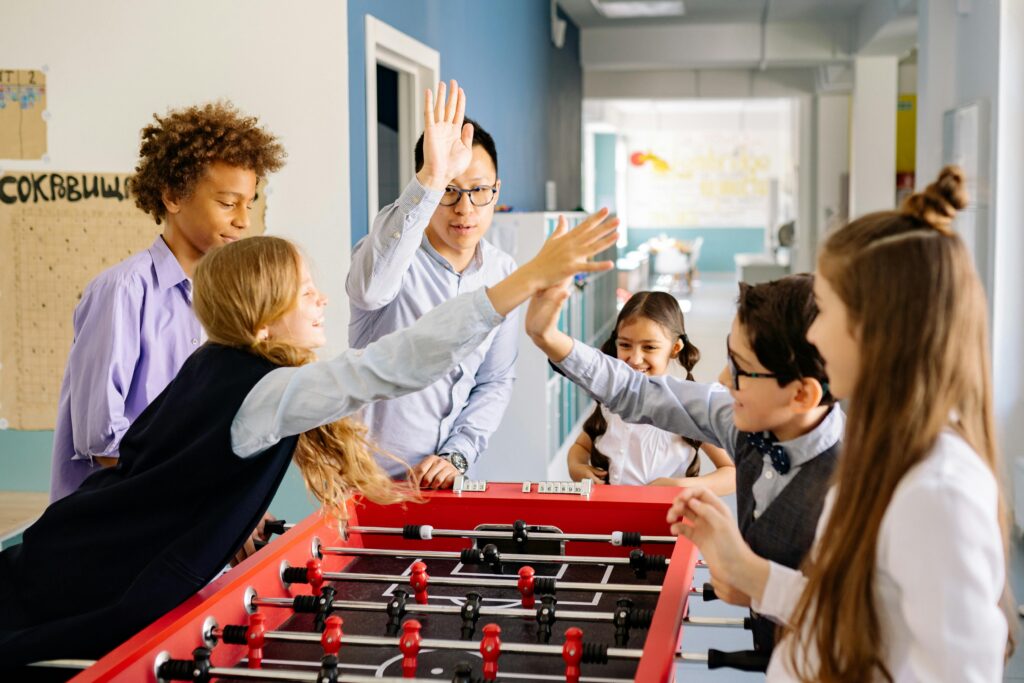
We often talk about the importance of home and school in a child’s life—the “first” and “second” places. But there’s a vital missing piece in this developmental puzzle: the third place. This concept, introduced by sociologist Ray Oldenburg, refers to informal public gathering spaces that foster connection, creativity, and personal identity. For adults, this might be a favorite coffee shop or community center. But what is the third place for children?
At Mirai Minds, we believe we must not only ask this question—but actively build the answer.
The Problem: Over-Structured Childhoods
Children today often move in a tight loop: school, home, tuition, extracurriculars. While these environments provide academic knowledge and family support, they are also filled with expectations, rules, and assessments. Even playtime is increasingly scheduled, supervised, and goal-oriented.
But where is the space where children can simply be?
A third place for children is not just another classroom or activity zone. It’s a space where they can:
- Explore their curiosity without fear of judgment
- Share ideas without the pressure to be right
- Play without performance
- Build social bonds in a low-stakes, high-trust setting
In essence, a third place is where children start becoming who they really are.
What a “Third Place for Children” Looks Like
It’s not a physical space alone—it’s a cultural one.
At Mirai Minds, we’ve worked hard to create such an environment in our workshops and camps. We reimagine education through emotional safety, creativity, and autonomy. Some days, this looks like children debating whether dragons deserve rights. On other days, it’s them co-writing stories where villains are the heroes. There are no gold stars. No marks. No “shoulds.”
Here, children:
- Question and challenge ideas without fear
- Learn to listen deeply and empathize
- Lead with imagination instead of imitation
This kind of third place allows children to stretch, stumble, rebuild, and grow—with others doing the same beside them.
Why a Third Place Is Crucial in Today’s World
We’re raising children in a complex world—flooded with information, identity pressures, and social comparison. A third place for children becomes a psychological anchor: a space where they feel seen, heard, and trusted—not judged.
These spaces:
- Build emotional resilience
- Strengthen self-awareness and interpersonal skills
- Encourage independent thinking and moral reasoning
We often say, “It takes a village to raise a child.” A third place is the public square of that village.
It’s where children can fail without falling, dream without deadline, and connect without competition.
Mirai Minds: Not Just a Learning Space—A Cultural Movement
What we’re building at Mirai Minds is not an alternative to school, but a supplement to what the world cannot always offer—a third place for children where they are not just learning facts, but forming identities.
Whether it’s our empathy-led workshops, storytelling labs, or creativity circles, we strive to:
✅ Offer emotionally safe environments
✅ Prioritize process over product
✅ Cultivate curiosity, not compliance
We want to raise not just good students, but kind thinkers. Not just children who follow rules, but those who know when to rewrite them.
Let’s Build These Spaces—Together
If you’re a parent, educator, or simply someone who believes in the power of nurturing potential, ask yourself:
Where is the third place in my child’s life?
If you can’t think of one, let us help you build it.
Join us at Mirai Minds—where education becomes exploration, and every child finds a space to become themselves.
Learn more here or follow us on Instagram to find the next session near you.]