According to the World Economic Forum’s Future of Jobs Report 2025, analytical thinking is the number one core skill for the future of work. Alongside creative thinking, resilience, and adaptability, it tops the list of capabilities that employers believe will define success in the decades ahead.
It’s a powerful reminder that the future of work is changing. But it also raises an equally important question.
When do these skills actually begin to develop?
The answer is much earlier than most of us imagine.
Long before children step into their first job interview or navigate the complexities of adulthood, they’re already learning how to analyse situations, make decisions, test ideas, and adapt when things don’t go according to plan. In many ways, the foundations of problem-solving are laid not in boardrooms or universities. But in childhood classrooms, playgrounds, and everyday moments of exploration.
For generations, education has rewarded students for finding the right answer. Success was often measured by how accurately children could recall information. Or apply a familiar method to reach a predictable outcome. While knowledge will always remain an essential part of learning, the world our children are growing up in is asking something very different.
It’s no longer enough to know the answer.
The real challenge is knowing what to do when there isn’t one.
As artificial intelligence automates routine tasks and makes information available in seconds, the value of simply possessing knowledge is changing. Facts have become more accessible than ever before. But the ability to interpret those facts, connect ideas, navigate uncertainty, and create original solutions remains deeply human. Increasingly, it is these skills that will distinguish future innovators, leaders, and changemakers.
This is why analytical thinking has become one of the most important skills we can nurture in children today.
We often misunderstand analytical thinking as a single ability. But in reality, it is a combination of many different competencies working together. It calls upon children to think critically, approach challenges creatively, communicate effectively, collaborate with others, make informed decisions, and remain resilient when their first attempt doesn’t succeed. Every meaningful challenge asks them to observe carefully, ask thoughtful questions, experiment with different possibilities, reflect on outcomes, and refine their thinking.
These are not just academic skills. They are life skills.
Perhaps the most encouraging part is that children begin developing them naturally from an early age.
When a child experiments with building a structure using blocks, they’re learning about balance, design, and persistence. When they negotiate the rules of a playground game, they’re practising communication, empathy, and compromise. Working through a disagreement with a classmate develops emotional intelligence, while completing a challenging puzzle teaches patience and strategic thinking. Even moments of failure become valuable opportunities to reassess, rethink, and try again.
These experiences may appear ordinary, but they are quietly shaping the way children learn to approach challenges throughout their lives.
This has important implications for educators and parents alike.
If we want to prepare children for a future that is constantly evolving, we must create learning environments that celebrate curiosity as much as correctness. We need classrooms where questions are welcomed, multiple solutions are explored, and mistakes are recognised as an essential part of the learning journey rather than something to be feared. Children who feel safe to experiment become learners who are willing to innovate.
After all, the careers our children will pursue may not even exist yet. The problems they will be asked to solve are likely to look very different from the ones we face today. While we cannot predict every challenge the future will bring, we can equip children with the mindset to approach those challenges with confidence, creativity, and resilience.
Knowledge and analytical thinking will always matter.
But in a world where information is available at the click of a button, it is the ability to think deeply, ask better questions, and solve unfamiliar problems that will truly set tomorrow’s learners apart.
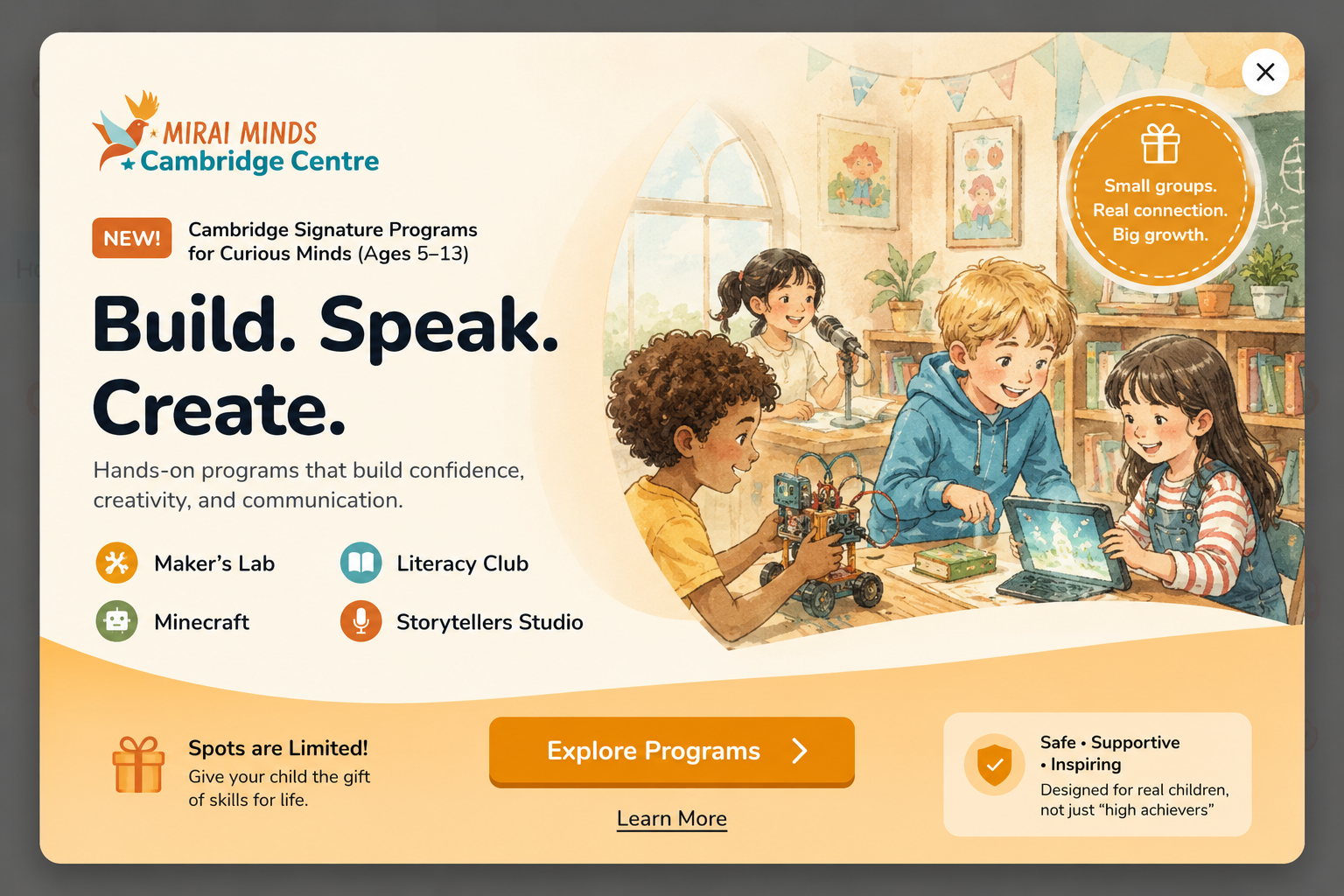
At Mirai Minds, we believe education should do more than prepare children for their next assessment. It should prepare them for a lifetime of curiosity, innovation, and meaningful problem-solving. Through hands-on STEM experiences, collaborative projects, and inquiry-driven learning, we empower children to become confident thinkers who don’t just consume knowledge, but use it to shape the future.