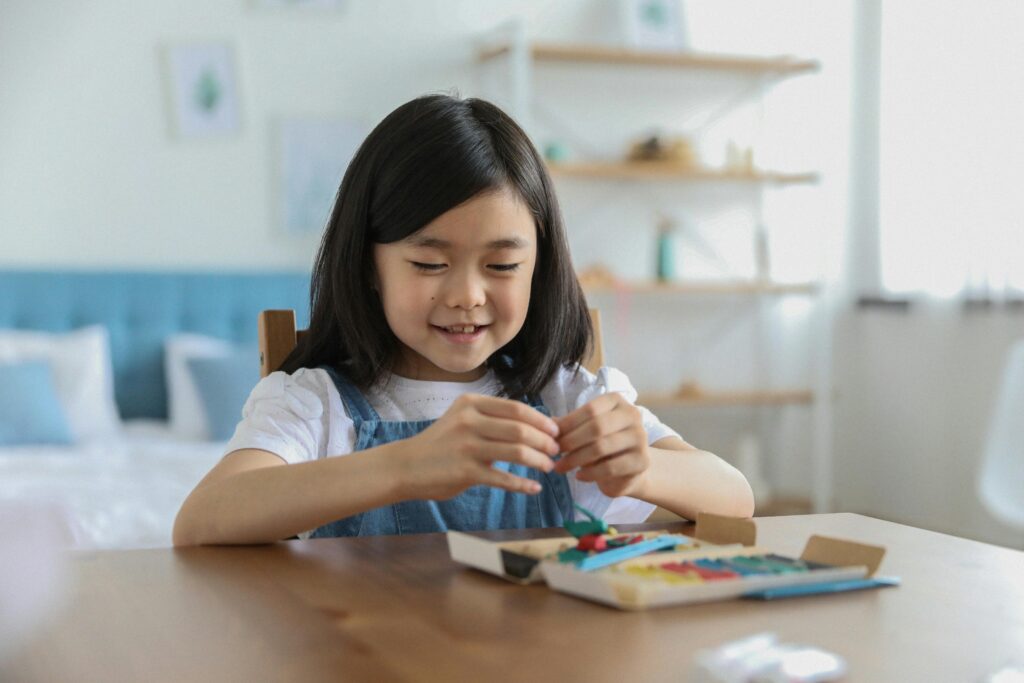
At home, curiosity boosters for child development can turn everyday items into gateways of learning. Children naturally ask questions, test boundaries, and explore possibilities.
When parents and caregivers introduce simple hands-on experiments, those spark moments become powerful learning experiences. These five easy experiments are designed to build curiosity, sharpen scientific thinking skills, and deepen children’s understanding of the world around them.
What Makes a Good Curiosity Booster Experiment
Before jumping into the experiments, understanding what turns a simple activity into an effective curiosity booster is important. Good experiments:
- Encourage asking questions and forming hypotheses
- Use materials easily available at home
- Allow children to see cause and effect
- Invite reflection on “why” and “how” outcomes differ from expectations
Using experiments this way strengthens cognitive growth, scientific thinking, and supports overall child development.
5 Easy Curiosity Boosters You Can Do at Home
Here are five easy experiments parents or caregivers can guide children through. Each of these acts as a curiosity booster for child development by engaging senses, questioning, and investigation.
1. Sink or Float Test
Materials: Bowl of water, various small objects (metal spoon, plastic toy, leaf, stone, etc).
Procedure: Ask the child to predict whether each object will sink or float. Drop objects one by one. Discuss observations.
What it builds: Understanding of density and buoyancy, observation skills, and hypothesis testing. This experiment is a classic curiosity booster for child development because children learn by testing predictions against real outcomes.
2. Magic Milk Experiment
Materials: Milk, food coloring, dish soap, shallow dish.
Procedure: Pour milk into the dish. Drop different food coloring spots. Then touch a drop of dish soap to the center and observe the color move.
What it builds: Curiosity about chemical reactions, understanding how surface tension works, visual contrast. This experiment makes exploring science tangible and encourages children to ask what else might change if variables are altered.
3. Rainbow in a Glass (Liquid Density)
Materials: Several liquids with different densities (honey, water, oil, etc), food coloring, clear glass.
Procedure: Colour each liquid slightly if possible. Carefully layer them in the glass (heaviest first). Observe the layers.
What it builds: Concepts of density, layering, immiscible liquids. This curiosity booster for child development helps children see that not all liquids mix, and that there are properties like weight and density that affect what happens.
4. DIY Cloud in a Jar
Materials: Glass jar, warm water, ice, plate, hairspray or lighter smoke cloud method (safe version).
Procedure: Warm water in jar, place plate or lid on top, put ice on plate, spray a little hairspray or use smoke source. Watch cloud form inside jar.
What it builds: Weather and meteorology basics, condensation, water cycle ideas. As a curiosity booster for child development, this helps children connect daily weather and sky with scientific principles.
5. Growing Seeds Experiment
Materials: Seeds (beans or peas), soil or cotton wool, small containers, water.
Procedure: Plant seeds, water and place in sunlight. Keep another set in shade or less light. Observe over days or weeks.
What it builds: Biology, plant growth, effect of environment. Children can wonder how light, water and soil affect growth. This experiment as a curiosity booster for child development fosters patience, observation over time, and understanding of life science.
Tips to Amplify Curiosity During Experiments
Using experiments is just part of developing curiosity boosters for child development. How adults engage matters greatly.
- Ask open-ended questions rather than explaining immediately. Let children propose ideas.
- Record predictions and results. Let children compare what they thought would happen and what did happen.
- Rotate materials and vary conditions so children experiment with variables.
- Celebrate failures and unexpected results as learning opportunities.
Why These Curiosity Boosters Matter
Curiosity boosters for child development contribute to long term outcomes including academic performance, problem solving ability, creativity, and even emotional resilience. Research into curiosity-driven learning shows children who regularly engage in experimental thinking and question asking grow into learners who are willing to explore uncertainty. When these habits begin at home, they reinforce formal schooling and help children stay motivated and confident in learning topics ranging from science to humanities.
Bringing It Into Daily Life
Incorporating curiosity boosters for child development need not take much time or special equipment. Morning routines, kitchen time, or evening can include a quick experiment. Keep a small “experiment box” with essentials ready. Use these moments as shared discovery time rather than something additional. Over time, curiosity becomes part of how children view the world rather than something special on weekends.
Mirai Minds is committed to helping families and educators bring curiosity boosters for child development into everyday life. If the goal is to nurture curious thinkers who question, explore and grow, Mirai Minds offers workshops, online guides, and family-friendly activities designed specifically to enhance curiosity, scientific thinking, and lifelong learning habits.
Reach out to Mirai Minds today to learn how to equip your child with tools for wonder and growth.