How Creative Play Supports Brain Development
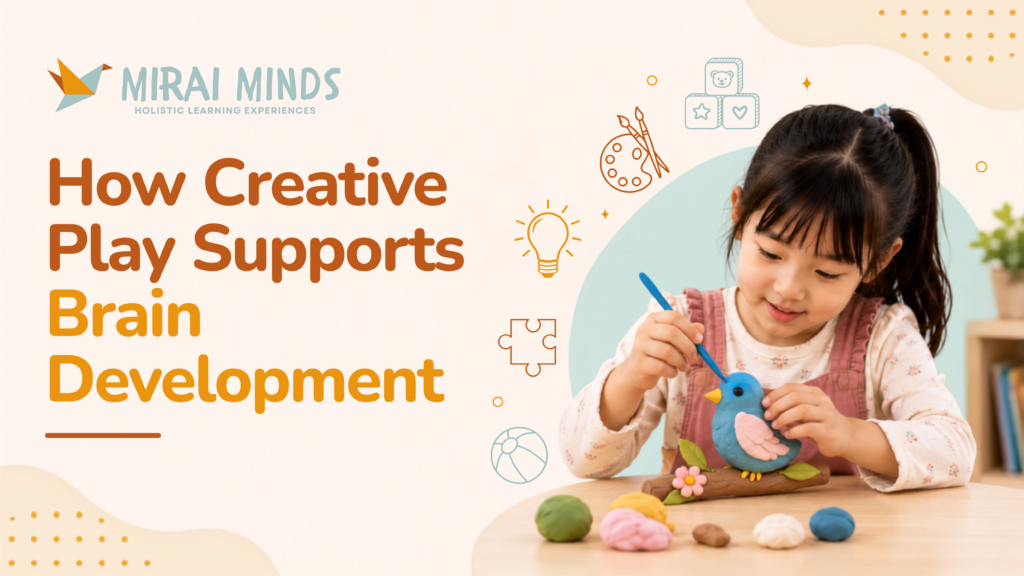
Children learn about the world by exploring, experimenting, imagining, and playing. Whether they are building with blocks, drawing a picture, creating a story, or solving a playful challenge, these experiences give children opportunities to develop important thinking and learning skills.
Creative play is more than just entertainment. It allows children to use their imagination, make decisions, solve problems, and explore different possibilities. These experiences support brain development while making learning enjoyable.
Creative Play Encourages Thinking Skills
When children build something, create a pattern, or invent a game, they are constantly making decisions. They think about what to do next, test their ideas, and adjust their approach when something does not work.
These experiences encourage problem-solving, logical thinking, and decision-making. Instead of simply following instructions, children get the opportunity to explore ideas independently and discover their own solutions.
Imagination Supports Creativity
Pretending a cardboard box is a spaceship or creating a story about imaginary characters encourages children to think beyond what they can see.
Imaginative play allows children to explore different ideas, develop stories, and consider new possibilities. It also gives them opportunities to express themselves and approach situations from different perspectives.
Over time, these experiences can help children become more flexible and creative thinkers.
Play Helps Children Learn to Manage Emotions
Not every play activity goes according to plan. A tower may fall, a drawing may look different from what a child imagined, or a game may require several attempts.
These moments offer opportunities to practise patience, handle frustration, and try again. When adults encourage children to work through small challenges instead of immediately solving everything for them, children can gradually develop persistence and confidence.
Creative Play Builds Social Skills
When children play together, they learn to share ideas, listen to others, take turns, and work towards a common goal.
Group activities such as building a structure, creating a story, or completing a design challenge encourage communication and cooperation. Children also learn that different people may have different ideas, and that working together can lead to new solutions.
Making Creative Play Part of Everyday Learning
Parents do not need expensive toys or complicated activities to encourage creative play. Everyday materials can offer plenty of opportunities to explore.
Try providing building blocks, paper, recyclable materials, art supplies, puzzles, or objects from nature. Allow children to experiment, ask questions, and decide what they want to create.
At Mirai Minds, hands-on and creative learning experiences encourage children to explore ideas, solve problems, and learn through active participation.
Creative play gives children the freedom to imagine, the confidence to experiment, and the opportunity to grow through discovery. When children have space to play and explore, learning becomes an experience they can actively shape for themselves.