Why Making Mistakes Is Good for Children’s Learning
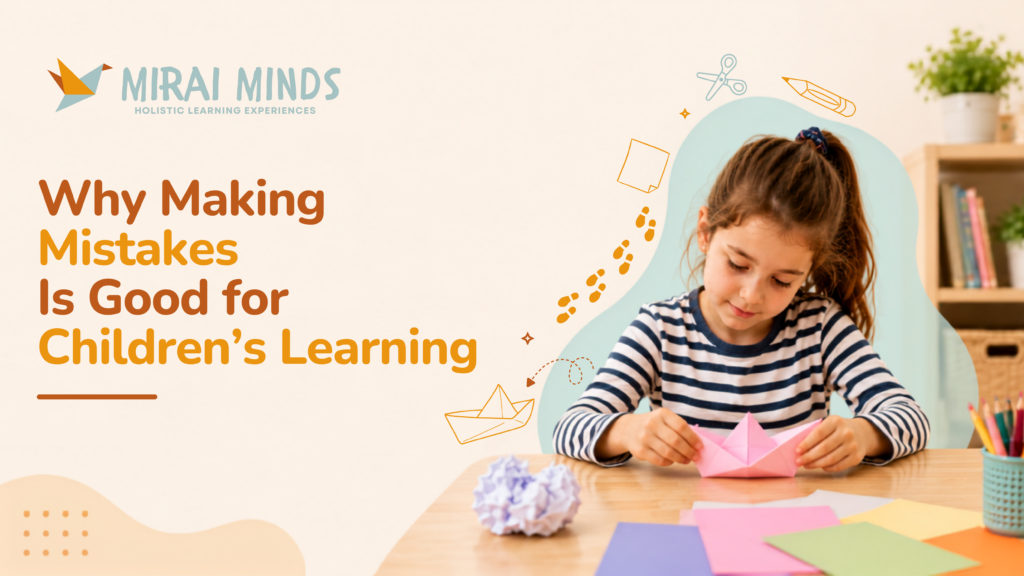
Making mistakes is a natural part of growing up. Whether a child struggles to solve a puzzle, builds a tower that falls, or gets an answer wrong, every mistake offers an opportunity to learn. Instead of seeing mistakes as failures, children can learn to view them as valuable steps towards understanding, confidence, and independence.
At Mirai Minds, hands-on learning and exploration encourage children to try, experiment, and discover new possibilities, even when things do not go as planned.
Mistakes Build Problem-Solving Skills
When children make mistakes, they begin to think about what went wrong and what they could do differently. For example, if a structure made from building blocks collapses, a child might experiment with a wider base or different materials.
This process encourages critical thinking, observation, and problem-solving skills. Instead of simply being told the correct answer, children discover solutions through their own experiences.
They Help Children Develop a Growth Mindset
A growth mindset teaches children that their abilities can improve through effort, practice, and learning. When children understand that mistakes are part of the process, they become more willing to try challenging tasks.
Parents can encourage this mindset by praising effort and progress rather than focusing only on correct answers. Saying, “You tried a different way this time,” helps children recognise the value of persistence.
Mistakes Build Confidence and Resilience
Children may feel disappointed when something does not work out. However, learning to manage these feelings helps them develop emotional resilience.
When children are encouraged to try again after a setback, they begin to understand that one unsuccessful attempt does not define their abilities. Over time, this can help them approach new challenges with greater confidence and less fear of failure.
They Encourage Curiosity and Creativity
Mistakes often lead to unexpected discoveries. A child experimenting with colours, designing a paper airplane, or testing a new building idea may discover something they did not originally plan.
These experiences encourage children to ask questions, explore alternatives, and think creatively. Giving children the freedom to experiment helps them become active participants in their learning.
How Parents Can Turn Mistakes into Learning Opportunities
Parents do not need to prevent every mistake. Instead, they can create a supportive environment where children feel comfortable learning from them.
Try these simple strategies:
- Ask guiding questions: “What do you think happened?” or “What could we try next?”
- Celebrate effort: Recognise persistence, curiosity, and creative thinking.
- Share your own mistakes: Explain what you learned from a small everyday mistake.
- Allow room to experiment: Let children test ideas and discover solutions independently.
- Avoid rushing to fix everything: Give children time to think and try again.
Let Mistakes Become Part of the Journey
Children learn best when they feel safe enough to explore, experiment, and make mistakes. Each unsuccessful attempt can help them develop problem-solving skills, resilience, creativity, and confidence.
At Mirai Minds, learning is about more than getting the right answer. It is about asking questions, trying new approaches, and discovering what is possible. When children learn to see mistakes as opportunities rather than failures, they build skills that support them both inside and outside the classroom.