The Hidden Benefits of Boredom for Creativity and Independent Thinking
In a world filled with screens, structured activities, and constant entertainment, children rarely get the opportunity to experience boredom. Parents often feel the need to keep their children occupied, but allowing them some unstructured time can be valuable for their development.
Boredom can encourage creativity, imagination, problem-solving, and independent thinking. When children are not constantly entertained, they have an opportunity to discover their interests, explore new ideas, and learn how to use their time meaningfully.
1. Boredom Encourages Creativity and Imagination
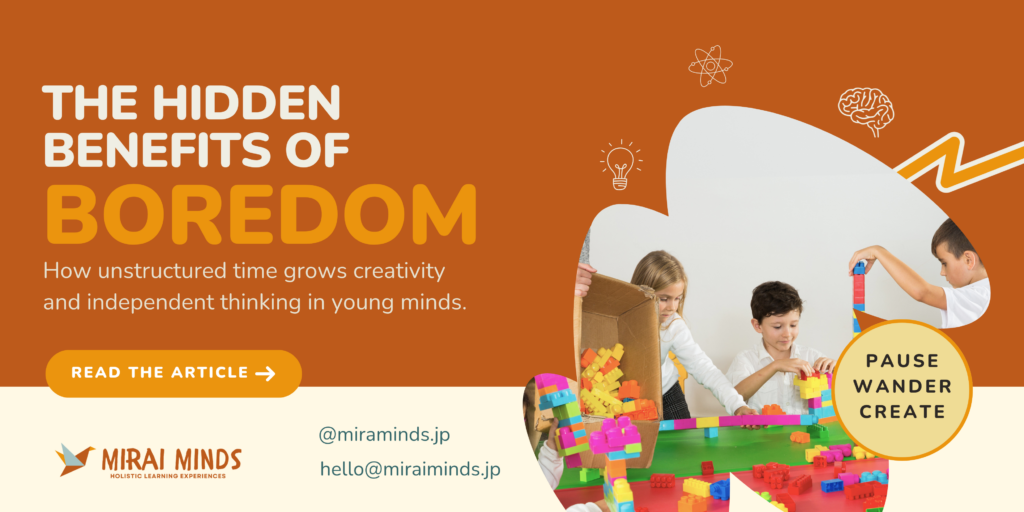
When children have nothing planned, they often begin creating their own activities. A cardboard box might become a spaceship, cushions might turn into a fort, or a few household objects might inspire a new invention.
These simple moments encourage children to think beyond familiar ideas and experiment with different possibilities. Giving children time for unstructured play helps them explore their imagination without worrying about following instructions or achieving a specific outcome.
2. It Develops Independent Thinking
Children who are always given activities may rely on adults to decide what they should do next. However, moments of boredom encourage them to make their own choices.
They begin asking themselves questions such as, “What can I create?” or “How can I make this more interesting?” These small decisions support independent thinking and help children become more confident in their ability to find solutions.
3. Boredom Builds Problem-Solving Skills
Finding something interesting to do requires children to identify possibilities, test ideas, and learn from mistakes. Whether they are building a tower, inventing a game, or figuring out how to use everyday materials, they practise solving problems independently.
These experiences help children understand that challenges do not always require immediate answers from adults. Sometimes, trying different approaches is an important part of learning.
4. It Supports Emotional Growth
Boredom can sometimes feel uncomfortable, especially for children who are used to constant stimulation. Learning to manage that feeling can give them opportunities to practise patience, adaptability, and emotional regulation.
Rather than immediately removing every moment of discomfort, parents can gently encourage children to sit with their feelings and explore what they might enjoy doing next.
5. How Parents Can Make Room for Boredom
Parents do not need to plan every minute of their child’s day. Simple changes can create more opportunities for independent exploration.
- Allow unstructured time: Leave some parts of the day open for children to choose their own activities.
- Offer open-ended materials: Provide paper, building blocks, cardboard boxes, and art supplies.
- Ask guiding questions: Instead of suggesting an activity immediately, ask, “What could you do with these materials?”
- Reduce constant screen entertainment: Create screen-free periods that leave room for imagination and exploration.
The goal is not to leave children without support, but to give them the freedom to discover their own ideas.
Boredom does not always need to be solved with another activity. Sometimes, it can be the starting point for a new idea, an imaginative game, or an independent discovery.
By making room for unstructured time, parents can help children develop creativity, problem-solving abilities, and confidence in their own decisions. At Mirai Minds, meaningful learning begins when children have the freedom to explore, question, experiment, and think for themselves.