Forest School Weekends in Tokyo: Why Your Child Needs a Saturday in the Woods
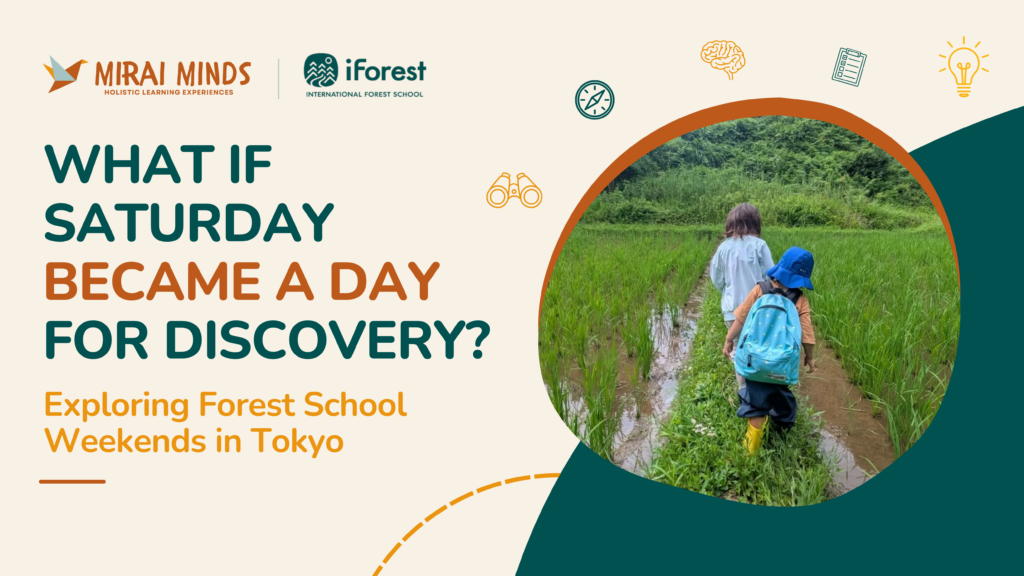
Most weekday learning happens indoors. So what changes when children learn outside instead, in a real park with real trees, dirt, and weather? That question sits at the heart of forest school, an approach to learning that moves children out of the classroom and into a green space built for exploring.
What Is Forest School?
Forest school replaces desks and worksheets with open space and unhurried time. Children spend extended hours outdoors with a qualified outdoor educator and a small group. Learning comes from what they see, touch, and discover around them rather than from a fixed lesson plan.
How Children Learn Outdoors
Natural settings teach in ways indoor spaces cannot.
- Uneven ground builds balance. Moving over natural terrain asks children to use their bodies differently.
- Weather builds resilience. Rain, wind, and changing conditions become part of the day, and children learn to be comfortable in them.
- Open space builds confidence. Room to climb a tree, follow an insect, or build a shelter that has to stand up on its own lets children test their own abilities.
What a Forest School Session Looks Like
A session blends structure and freedom:
- Free exploration and nature observation: children notice what is around them at their own pace.
- Guided outdoor games and group activities: educators lead activities that bring the group together.
- Hands-on nature study: children learn about plants, insects, and the seasons by handling and observing them.
- Unstructured play, rain or shine: open-ended play is treated as part of learning, not a break from it.
Why No Two Sessions Are Alike
The season, the weather, and what the children find on the day all shape the session. This variability is deliberate. It is how forest school builds independence, curiosity, and comfort with the outdoors.
The Role of the Educator
In forest school, the educator guides rather than lectures. Trained outdoor educators, experienced in nature-based early childhood and youth education, stay close to the group. Small group sizes, with no more than four children per facilitator, keep the setting small enough for each child to be observed and supported.
Do Children Need Outdoor Experience?
No. Sessions begin with free exploration, so children settle in at their own pace. This gentle start lets children who are new to the outdoors build comfort before moving into more guided activities.
Preparing for Outdoor Learning
Because forest school runs in all kinds of weather, children dress for the weather, not the occasion. Waterproof clothing, closed toe shoes, layers they can add or remove, and clothes that can get dirty all help. Everything will get muddy, and that’s a good sign. Sessions are only cancelled when conditions become unsafe, such as typhoons, thunderstorms, or heat alerts.
Forest School in Tokyo
Finding this kind of space in a city can be a challenge, and that is where Mirai Minds comes in. Working in partnership with iForest Tokyo, which runs Tokyo’s established forest school programs, Mirai Minds offers Forest School Weekends for children aged 5 and above. The sessions take place at Tatsuminomori Ryokudo Park in Koto Ward, a park with open lawns, mature trees, and quiet paths. It has room for both structured nature study and the kind of unstructured play that is hard to find in the city.
To learn more about the program, visit Mirai Minds: https://miraiminds.jp/classes/iforest-forest-school/