Learning Together: How Collaborative Activities Build Social & Cognitive Skills
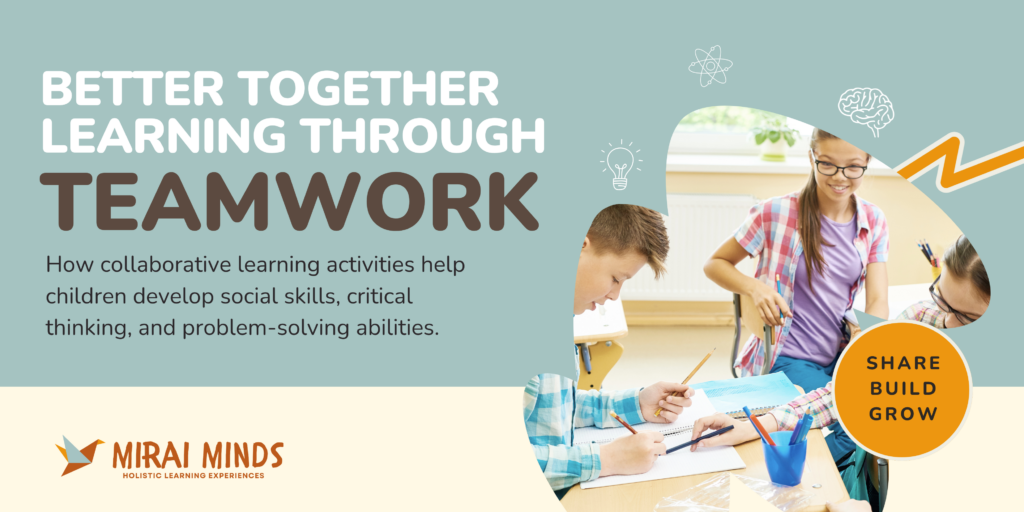
Children learn valuable life skills when they work, explore, and solve problems together. Whether they are building a tower, completing a puzzle, creating a story, or working on a group project, collaborative activities give children opportunities to share ideas, listen to others, and think creatively.
These shared experiences support both social skills and cognitive development in children, helping them become better communicators, thoughtful problem-solvers, and confident learners.
1. Encourages Communication and Teamwork
Collaborative activities encourage children to express their thoughts, ask questions, and listen to different perspectives. When children work towards a shared goal, they learn how to communicate their ideas and understand what others are trying to say.
Simple activities such as building with blocks or creating artwork together can help children practise taking turns, sharing responsibilities, and working as a team.
2. Develops Problem-Solving Skills
Working together often means facing small challenges. Children may need to figure out how to complete a puzzle, balance a structure, or decide how to approach a group task.
These situations encourage them to explore different solutions, test their ideas, and learn from mistakes. By discussing possible approaches with others, children discover that problems can often be solved in more than one way.
3. Builds Empathy and Emotional Understanding
Group activities help children recognise that others may have different feelings, preferences, and opinions. They learn to wait patiently, manage disagreements, and consider how their actions affect their teammates.
For example, when two children want to use the same material, they have an opportunity to practise negotiation, compromise, and understanding. These experiences can gradually strengthen empathy and emotional awareness.
4. Strengthens Thinking and Decision-Making
Collaborative learning gives children opportunities to think beyond their own ideas. They can compare suggestions, identify patterns, plan their next steps, and make decisions together.
Activities such as group puzzles, sorting games, building challenges, and shared storytelling encourage children to use reasoning and creativity. Listening to different viewpoints can also help them discover new ways of approaching a task.
5. Encourages Confidence and Independence
When children contribute to a group activity, they begin to recognise the value of their ideas and efforts. Completing a shared task can give them a sense of achievement while helping them feel more comfortable participating in future activities.
With practice, children learn when to seek help, how to contribute independently, and how to support others without relying on an adult to solve every problem.
How Parents Can Encourage Collaborative Learning at Home
Parents can create meaningful learning opportunities through simple everyday activities:
- Build together: Use blocks or recycled materials to create a structure as a team.
- Solve puzzles: Work together to identify pieces, recognise patterns, and complete a picture.
- Cook as a team: Let children help with age-appropriate tasks, follow steps, and share responsibilities.
- Create a group story: Take turns adding characters, events, and ideas to an imaginative story.
- Reflect together: Ask questions such as “What worked well?” or “How could we try it differently next time?”
Conclusion
Collaborative activities make learning a shared experience where children can develop communication, empathy, reasoning, creativity, and problem-solving skills. By working together, they learn not only how to complete a task but also how to understand others and approach challenges with confidence.
At Mirai Minds, meaningful and engaging learning experiences encourage children to explore ideas, learn through interaction, and develop skills that support their growth both inside and outside the classroom.