The Hidden Learning Moments in Your Child’s Everyday Life
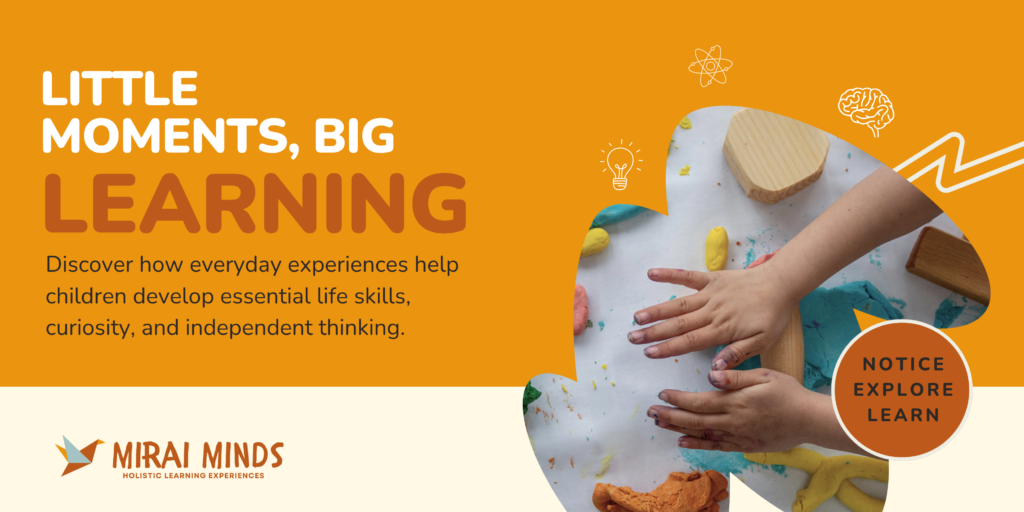
Children learn in more ways than we often realise. Learning does not happen only in classrooms, during structured activities, or while reading books. Everyday experiences such as helping in the kitchen, getting dressed, playing with toys, or asking questions about the world can offer valuable learning opportunities.
At Mirai Minds, we believe that children develop important skills through meaningful experiences. By recognising these everyday learning moments, parents can support their child’s curiosity, confidence, and overall development.
1. Everyday Tasks Build Independence
Simple routines can help children become more independent. Putting away toys, choosing their clothes, packing a school bag, or helping set the table encourages them to take responsibility for small tasks.
These experiences help children practise decision-making, follow instructions, and understand routines. Giving children age-appropriate responsibilities also allows them to build confidence in their own abilities.
2. Play Encourages Creativity and Problem-Solving
When children play with blocks, arrange objects, draw pictures, or create imaginary stories, they are doing more than having fun. They are experimenting with ideas, exploring possibilities, and finding solutions to small challenges.
For example, building a tower teaches children to think about balance and structure. If the tower falls, they get an opportunity to try a different approach and learn from the experience.
3. Conversations Strengthen Language Skills
Everyday conversations are powerful learning opportunities. Talking about a walk in the park, discussing a favourite story, or asking children about their day encourages them to express their thoughts and feelings.
Parents can support language development by listening patiently, asking open-ended questions, and introducing new words naturally. Questions such as “What do you think will happen next?” encourage children to observe, imagine, and explain their ideas.
4. Daily Experiences Develop Thinking Skills
Ordinary activities can introduce children to early mathematical and reasoning concepts. Sorting laundry by colour, counting fruit while shopping, comparing the sizes of objects, or helping measure ingredients during cooking can make learning practical and engaging.
These experiences help children notice patterns, compare quantities, follow sequences, and make connections between what they observe and what they already know.
5. Small Challenges Build Emotional Resilience
Everyday life also gives children opportunities to understand and manage their emotions. Waiting for a turn, dealing with a difficult puzzle, or learning to complete a task after making a mistake can help them practise patience and perseverance.
Instead of immediately solving every problem, parents can offer encouragement and guide children towards finding their own solutions. This helps children learn that mistakes are part of the learning process.
How Parents Can Make Everyday Learning Meaningful
Parents do not need to create a special lesson for every learning opportunity. Small changes can make daily experiences more meaningful:
- Encourage children to ask questions and explore their surroundings.
- Involve them in simple, age-appropriate household tasks.
- Make time for imaginative and unstructured play.
- Ask open-ended questions instead of always giving answers.
- Appreciate their effort, curiosity, and willingness to try.
Conclusion
Some of the most valuable learning experiences happen during ordinary moments. Everyday routines, conversations, play, and small challenges can help children develop independence, creativity, communication, and problem-solving skills.
By allowing children to explore, participate, and learn through experience, parents can turn daily life into an opportunity for growth. At Mirai Minds, we encourage meaningful learning experiences that help children discover their abilities and build skills for everyday life.