How Playful Conversations Help Children Build Communication Skills
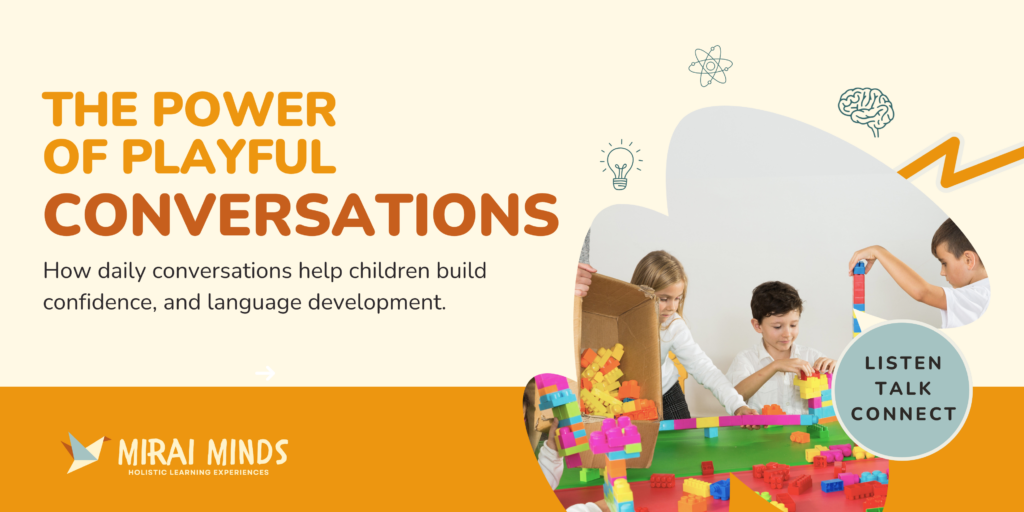
Children learn to communicate through everyday interactions, and playful conversations make these moments enjoyable and meaningful. Whether they are talking about their favourite toys, making up stories, asking questions, or pretending to run a shop, children practise expressing their thoughts and understanding others.
For parents, playful conversations are a simple way to support communication skills in children while strengthening their confidence and curiosity.
1. Encourages Children to Express Their Thoughts
When children feel comfortable during a conversation, they are more likely to share their ideas, feelings, and opinions. Asking open-ended questions such as “What do you think will happen next?” encourages them to explain their thoughts instead of giving one-word answers.
These small interactions help children organise their ideas and express themselves more clearly.
2. Develops Listening and Understanding
Communication is not only about speaking. It also involves listening, understanding, and responding appropriately. During playful conversations, children learn to take turns, pay attention to what others say, and respond with relevant questions or comments.
Games, storytelling, and pretend play give children natural opportunities to practise these important skills.
3. Builds Vocabulary and Language Skills
Conversations introduce children to new words, expressions, and ways of describing their experiences. For example, while building with blocks, a parent might use words such as “taller,” “balanced,” or “stable.”
Connecting new words to real activities helps children understand their meaning and use them in everyday conversations. Over time, this can support language development in children.
4. Strengthens Confidence in Social Interactions
Some children need time and encouragement before they feel comfortable speaking in a group. Playful conversations create a relaxed environment where they can practise communicating without feeling pressured to give the perfect answer.
Pretend play, role-playing different characters, and sharing imaginative stories can help children become more comfortable expressing themselves and interacting with others.
5. Supports Creativity and Problem-Solving
Playful conversations often lead to unexpected ideas. When children invent stories, decide how a game should work, or solve a pretend problem together, they learn to explain their reasoning and consider different perspectives.
For example, asking “How can we help our toy character cross the river?” encourages children to think creatively, discuss possible solutions, and communicate their ideas.
How Parents Can Encourage Playful Conversations
Parents do not need special materials or a structured lesson to help children develop communication skills. Simple everyday habits can make a difference:
- Ask open-ended questions: Encourage children to explain their ideas rather than answer only yes or no.
- Follow their interests: Talk about what they are playing with, drawing, reading, or exploring.
- Take turns speaking: Give children enough time to finish their thoughts without interrupting.
- Expand on their words: If a child says, “The car is fast,” respond with, “Yes, the red car is moving very fast!”
- Make room for imagination: Use storytelling, pretend play, and silly questions to keep conversations engaging.
Playful conversations help children practise speaking, listening, understanding, and expressing themselves in a natural and enjoyable way. These everyday exchanges can support language development, social confidence, creativity, and stronger relationships.
At Mirai Minds, meaningful learning experiences encourage children to explore ideas, ask questions, and express themselves with confidence. Sometimes, a simple conversation during play can become a valuable opportunity for learning and growth.