How Mirai Minds’ Global Youth Leadership Programme in Japan Helps Students Grow
Leadership is not just about taking charge or being the person who speaks the most. It also involves listening to others, understanding different perspectives, solving problems and making thoughtful decisions.
For students, developing these skills early can help them become more confident in handling challenges, working with others and expressing their ideas. Learning experiences that encourage participation and practical thinking can help young people explore what leadership means in real-world situations.
Here are five important areas of leadership development that students can explore.
1. Understanding Leadership and Personal Strengths
Becoming a leader starts with understanding yourself. Recognising personal strengths, exploring different leadership styles and learning what makes a good leader can help students understand how they contribute to a team.
Activities such as character-strength exercises and team agreements encourage students to reflect on their abilities and responsibilities.
2. Developing Communication and Teamwork
Good leadership involves more than sharing ideas. It also requires listening, collaborating and communicating effectively.
Team-based activities allow students to exchange perspectives, work towards shared goals and understand the value of collective thinking.
3. Learning to Solve Real-World Problems
Real-world challenges do not always have straightforward answers. Case studies encourage students to analyse situations, identify underlying problems and consider possible solutions.
Through research, discussion and project work, students can practise critical thinking and informed decision-making.
4. Exploring Innovation and Digital Leadership
Technology continues to influence how people communicate, work and solve problems. Understanding digital transformation and innovation can help students consider how leadership is changing.
Exploring topics such as digital leadership and real-world case studies gives students opportunities to think about the role of technology in shaping the future.
5. Building Confidence Through Practical Experience
Leadership skills develop through practice. Role-plays, presentations, negotiations and collaborative projects give students opportunities to apply what they learn.
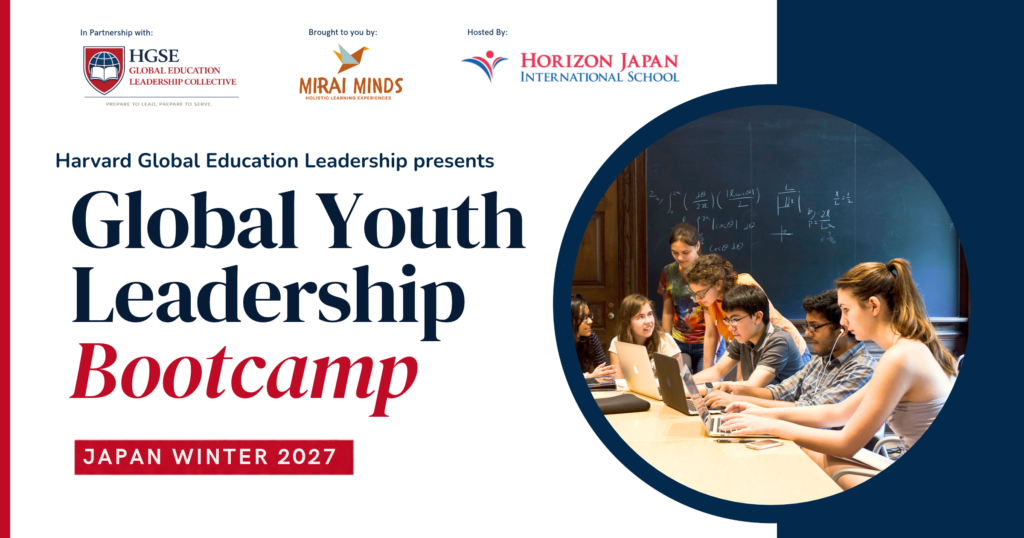
This approach is central to the Global Youth Leadership Bootcamp, presented by the Harvard Graduate School of Education Global Education Leadership Collective (HGSE-GELC), brought to Japan by Mirai Minds and hosted at Horizon Japan International School.
The three-day programme, taking place from 5–7 January 2027, is designed for students in Grades 8–12. Experienced student mentors from HGSE-GELC facilitate sessions covering leadership, communication, problem-solving, innovation and teamwork.
On completion, students receive a certificate signed by mentors from HGSE-GELC.
Preparing Students for Tomorrow
Leadership develops through curiosity, collaboration and the willingness to approach challenges from different perspectives. By giving students opportunities to discuss ideas, solve problems and work together, practical learning experiences can help them build skills that extend beyond the classroom.